Health Signals10 August 2026
Are Lilies Toxic to Cats? Pollen and Vase Water Matter
Are lilies toxic to cats? Learn why pollen and vase water matter, what to record, and why a suspected exposure needs a prompt call.
TextPetzette Editorial
Read4 Min

Evidence status
Source-backed editorial
- Evidence record
- 3 claim cards linked to 4 documented sources.
- Independent expert review
- Not commissioned. Petzette Editorial is responsible for the published wording.
- Source record checked
- 13 July 2026
- Scope
- General information, not an individual diagnosis or treatment plan.
Are lilies toxic to cats? True lilies and daylilies are highly dangerous to cats. A cat does not have to chew a bloom for contact to matter: pollen that lands on fur and vase water are possible exposure routes. If your cat may have contacted any part of a true lily or daylily, call your veterinarian or an animal poison-control service immediately. Do not try to make your cat vomit unless a professional tells you to.
True Lilies Need a Cat-Specific Answer
“Lily” is a common name, not a complete plant identification. The U.S. Food and Drug Administration distinguishes true lilies and daylilies from other plants with “lily” in the name. That distinction matters for a cat, but it does not make an unknown bouquet safe to sort out at home.
This guide concerns a confirmed or suspected true-lily or daylily exposure in a cat. A Peace Lily is a different plant with a different exposure profile; the Peace Lily safety guide explains why its name should not be borrowed as an answer for every lily.
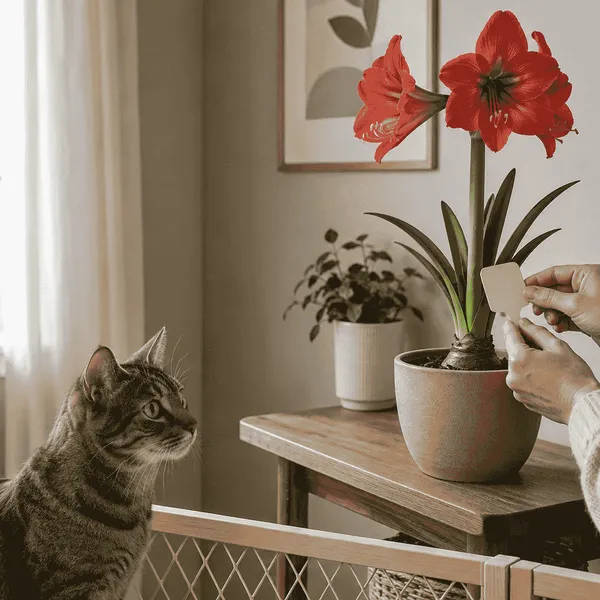
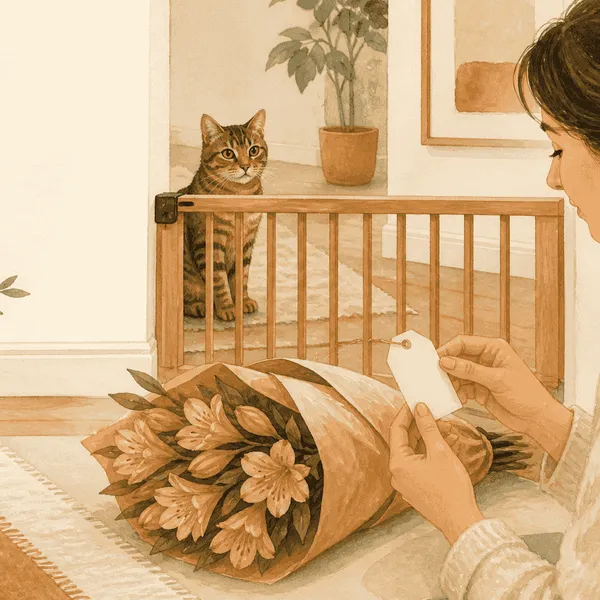
Keep the florist sleeve, plant tag, receipt, or a clear photo of the whole arrangement if you have one. If the bouquet contains several plants, flower food, or an unfamiliar label, describe that uncertainty when you call. A photo can help the professional identify the plant, but it cannot supply a home diagnosis or treatment plan.
Pollen and Vase Water Are Part of the Exposure
The FDA and Cats Protection both highlight a detail that is easy to miss: the risk is not limited to a cat biting a flower. With true lilies and daylilies, a cat may brush past a bouquet, pick up pollen on fur, and ingest it during normal grooming. Vase water can also be within reach.
The FDA’s guidance includes flowers, leaves, stems, pollen, and vase water in the concern for cats. That is why a snapped stem, an intact-looking bloom, or a cat who has not been seen chewing does not settle the question. Write down what you know rather than trying to calculate an amount from the visible mess.

Make One Useful Call, Not a Home Plan
Cornell’s Feline Health Center advises immediate professional direction after suspected poisoning and specifically warns against inducing vomiting unless instructed. The American Veterinary Medical Association likewise recommends keeping the relevant container or label and not giving medication or trying to induce vomiting unless a veterinarian or poison-control professional directs it.
When you call, share the facts you have without filling gaps with guesses:
- the plant name, florist sleeve, label, or photos;
- whether your cat may have chewed, swallowed, brushed against, or licked vase water;
- the possible time of contact and what plant parts may be missing;
- your cat’s age, approximate weight, usual health information, and any changes you have noticed.
Do not wait for a particular sign before calling, and do not start a household remedy while you decide. The plant, route of contact, timing, and cat in front of you all shape the next step. An article cannot choose that step for an individual animal.
Keep the Plant Information While You Prevent More Access
If someone else is available, ask them to keep the cat away from the bouquet and place the true lily or daylily out of cat-accessible space while you make the call. Keep the label, vase, and any dropped plant material available rather than discarding the details that could clarify the exposure.
Avoid turning the moment into a cleaning or treatment project. The Cats Protection prevention message is to avoid lilies in homes and accessible gardens where cats live; after possible contact, the priority is prompt veterinary advice. A cat who looks unchanged has not created a personal all-clear when the contact route or plant identity is uncertain.
Make a New-Cat Home a No-Lily Zone
Before a new cat arrives—or when you bring home flowers—check the botanical names rather than relying on a common-name list. Avoid true lilies and daylilies in any space your cat can reach, including places they may access by climbing. Save florist sleeves and plant labels until an arrangement is gone, especially when more than one species is included.
For an unfamiliar plant, a mixed bouquet, or another possible exposure, use the broader plant-exposure owner checklist to gather the information a professional needs. The dog-specific lily guide also shows why one word on a plant label cannot answer the same question for every species.
For cats, true lilies and daylilies are a prevention-and-call decision, not a home-triage puzzle. Keep them out of cat-accessible spaces, preserve the plant information, and contact your veterinarian or an animal poison-control service immediately if contact may have happened.
Sources
Petzette's claim cards for this article point to the following scientific, veterinary, or animal-welfare sources.
- Cats Protection Lily Safety: UK animal-welfare organization guidance
- FDA Lilies And Cats: Government veterinary safety guidance
- Cornell Feline Vomiting And Household Hazards: Veterinary-school clinical and poison-safety guidance
- AVMA Pet First Aid: Poison Response Boundary: Veterinary-association first-aid brochure