Health Signals09 August 2026
Are Money Trees Toxic to Cats? Check the Exact Plant
Are money trees toxic to cats? Confirm Pachira aquatica, separate it from jade plants, and know what to record after chewing.
TextPetzette Editorial
Read4 Min
Evidence status
Source-backed editorial
- Evidence record
- 3 claim cards linked to 3 documented sources.
- Independent expert review
- Not commissioned. Petzette Editorial is responsible for the published wording.
- Source record checked
- 09 August 2026
- Scope
- General information, not an individual diagnosis or treatment plan.
Are money trees toxic to cats? If the pot label says Pachira aquatica, ASPCA lists that Money Tree as non-toxic to cats and dogs. The common name is the catch: it can also be used for jade plant, Crassula ovata, which ASPCA describes as toxic. Before deciding the plant is safe to leave within reach—or deciding what an eaten leaf means—check the name attached to the actual pot. For an unknown plant or a possible exposure, the broader plant-exposure owner checklist helps you gather the facts a professional needs.
One Common Name Can Point to Different Plants
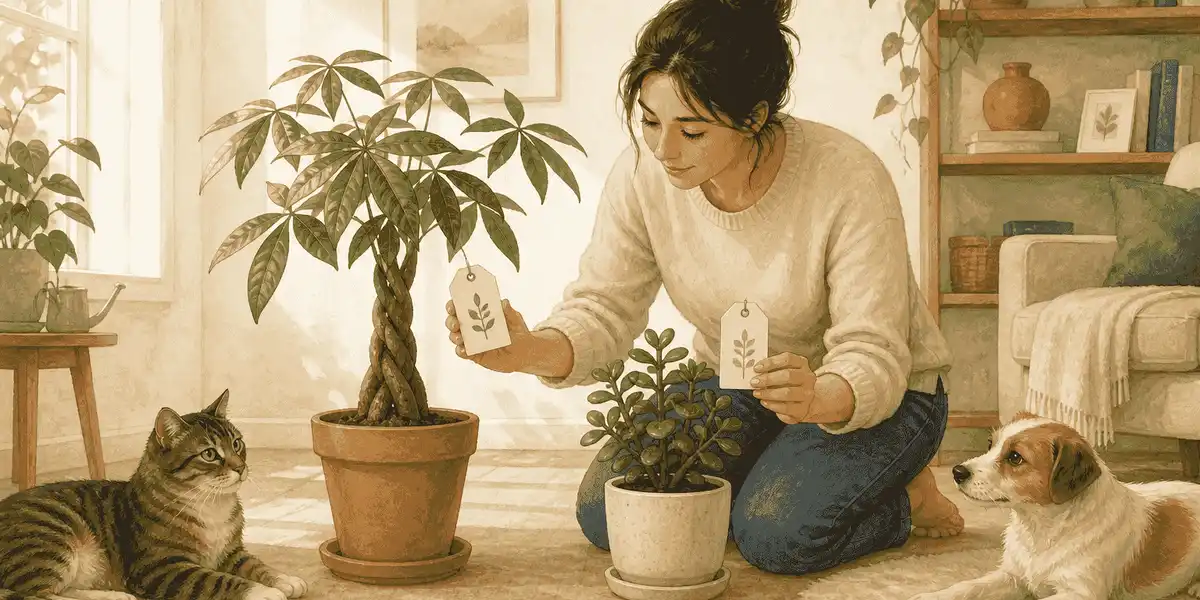
“Money tree” is a starting label, not a botanical identity. ASPCA’s individual Money Tree record names Pachira aquatica. Its safety guidance separately warns that jade, Crassula ovata, can also be called a money tree or money plant. Those are not interchangeable answers for a cat or dog.
Look for the nursery tag, delivery information, plant-app record, or receipt while it is still easy to find. If the tag is missing, take a clear photo of the whole plant, the pot, and any remaining packaging. A leaf photo may help someone recognize a plant, but it cannot make an unknown specimen into confirmed Pachira aquatica.
This is the same reason that a daisy safety answer needs the exact flower name. Common names are useful clues; the botanical name keeps the safety question attached to the right plant.
If the Tag Says Pachira aquatica
ASPCA lists Pachira aquatica as non-toxic to cats and dogs. That classification is reassuring about the named plant’s poison profile, but it is not an invitation to let a pet repeatedly chew leaves. ASPCA notes that pets can develop stomach upset after eating plant material, and its Money Tree record lists nausea, vomiting, and loose stool among clinical signs.
Read those details as context, not as a diagnosis. Vomiting or a loose stool can have many explanations, and a cat with no current change has not answered every question about an uncertain plant, a treated pot, or a larger exposure. The useful distinction is simple: confirm the plant first, then describe the animal in front of you.
Do Not Borrow the Pachira Answer for Jade
If the label says jade or Crassula ovata, do not use the Pachira classification as a shortcut. ASPCA describes jade as toxic and notes that the two plants share overlapping common names. A plant called “money tree” without its botanical name is therefore still an unresolved identification question.
The same caution applies to mixed planters. A confirmed Pachira aquatica label does not identify a second plant in the container, fertilizer, pesticide, plant food, or potting product. It also does not tell you what a detached leaf, plastic tie, or decorative stone might mean after it has been swallowed.
If the identity or added product is uncertain, move your pet away from the area calmly, keep the pot and label available, and contact your veterinarian or an animal poison-control service for individual direction. The article cannot sort an unknown plant or exposure from a common name alone.
After Chewing, Make the Call Useful
Before or during the call, make a short factual note:
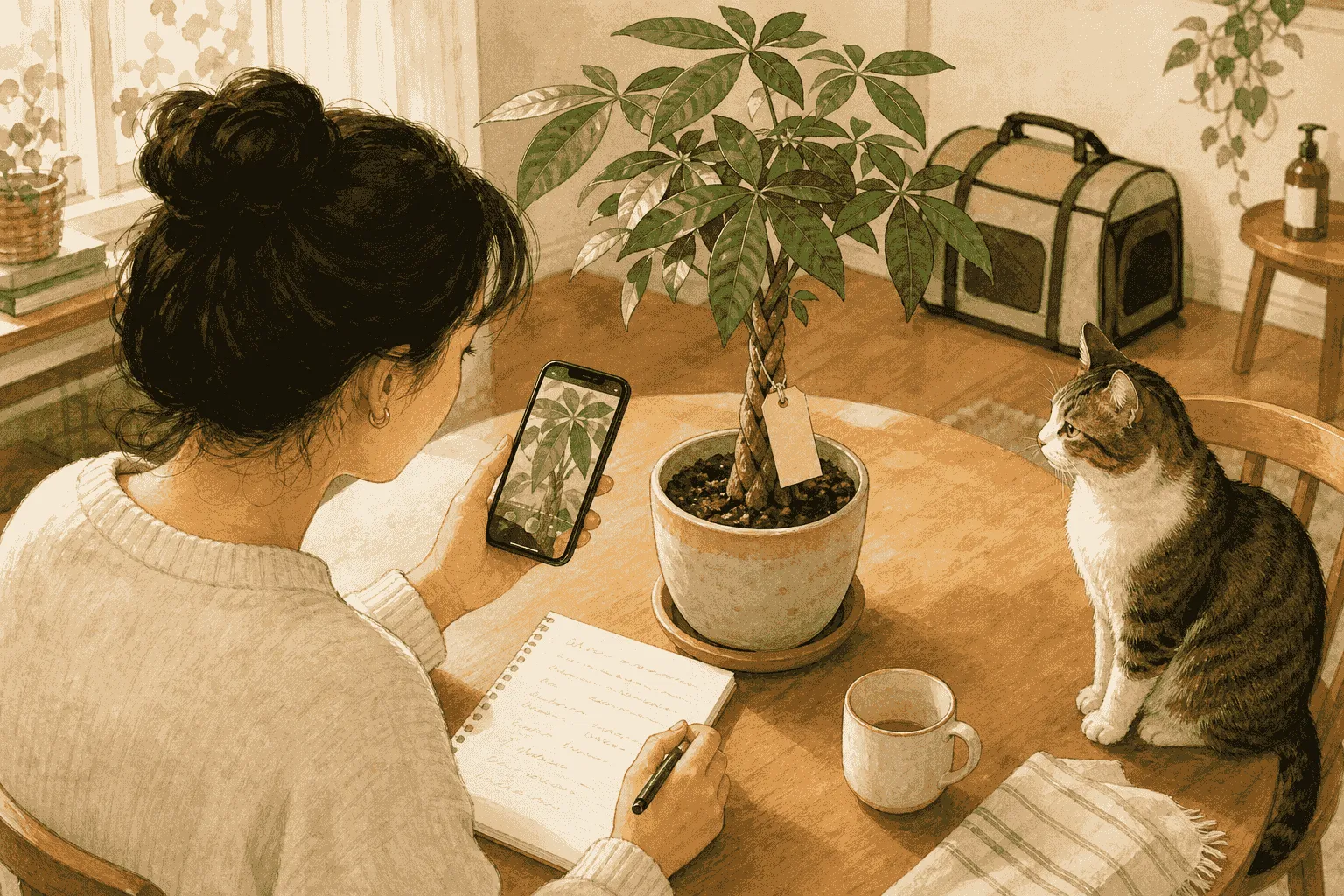
- the exact name on the pot, plus a photo or the fact that the name is unknown;
- whether the pet chewed, swallowed, pulled up, or only contacted the plant;
- what may be missing and the possible time of access, without pretending to know an exact amount;
- any current change you have noticed; and
- the plant, pot, and labels for any products that may have been used nearby.
That note is more useful than a home test. American Veterinary Medical Association first-aid guidance advises against inducing vomiting or giving medication unless a veterinarian or animal poison-control professional directs it. If your cat or dog has a sudden or concerning change, ask your veterinarian promptly; a general plant listing cannot choose a treatment for the individual animal.
Make the Name Easy to Find Next Time
A new pet may climb, pull, or explore a room differently once it settles in. Keep a photo of each houseplant’s tag with its room location, and keep garden or pot-care products separate from those notes. When someone brings home a plant called a money tree, add the full botanical name before relying on the shared label.
The bottom line: ASPCA lists Pachira aquatica Money Tree as non-toxic to cats and dogs, but “money tree” can also mean toxic jade. Confirm the exact plant, avoid turning “non-toxic” into “edible,” and call a veterinarian or poison-control service before trying a home treatment when the plant or exposure is uncertain.
Sources
Petzette's claim cards for this article point to the following scientific, veterinary, or animal-welfare sources.
- ASPCA Money Tree Identity And Plant Classification: Animal poison-control plant-database records and ASPCA veterinary safety guidance
ASPCA Animal Poison Control Center. *Toxic and Non-toxic Plants*: “Money Tree” (*Pachira aquatica*); ASPCA, “Are Succulents Safe to Have Around Pets?” Directly reviewed 2026-08-09.
- Spider Plant Poison-Control Classification And Name Check: Animal poison-control databases and veterinary manual guidance
- AVMA Pet First Aid: Poison Response Boundary: Veterinary-association first-aid brochure