Nutrition04 September 2026
Are Zinnias Toxic to Cats? Check the Plant Label First
Are zinnias toxic to cats? Confirm the plant label, keep the non-toxic classification narrow, and know what to record after a possible chew.
TextPetzette Editorial
Read4 Min
Evidence status
Source-backed editorial
- Evidence record
- 3 claim cards linked to 3 documented sources.
- Independent expert review
- Not commissioned. Petzette Editorial is responsible for the published wording.
- Source record checked
- 04 September 2026
- Scope
- General information, not an individual diagnosis or treatment plan.
Are zinnias toxic to cats? If the plant in front of you is a confirmed Zinnia species, the ASPCA Animal Poison Control plant database lists it as non-toxic to cats and dogs. That is a useful classification, but it is not an edible-plant recommendation or a way to decide what to do after an uncertain chew.
The practical decision is to identify the flower, separate it from anything else in the arrangement, and keep the facts ready. If the plant, exposure, or your cat’s condition is unclear, contact a veterinarian or animal poison-control service rather than trying to settle the question from a photograph or a single sign. For a wider room scan, use the plants toxic to cats and dogs checklist.
Name the Flower Before You Use the Listing
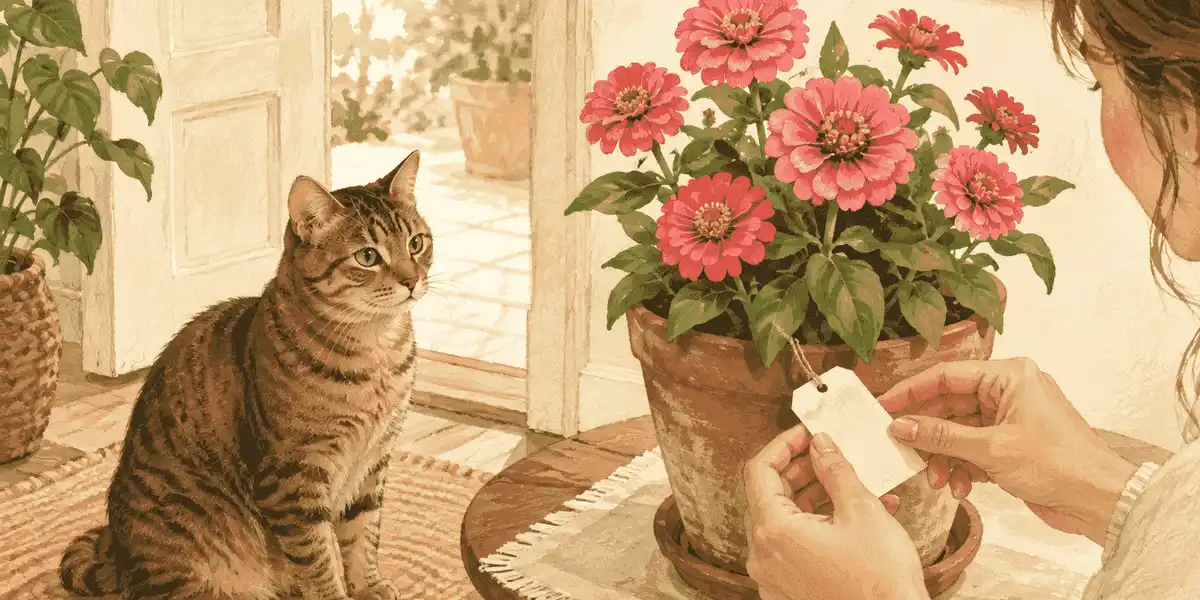
The ASPCA entry names Zinnia species and places the plant in the Asteraceae family. Start with the label attached to the pot, a nursery record, or a clear photograph of the whole plant and its container. A flower that looks like a zinnia is not enough to establish that it is the named plant in the database.
This matters even more when a new cat is exploring a room. A mixed planter, bouquet, or garden bed can contain another flower with a different classification. Fertilizer, pesticide, potting material, and decorative pieces are separate parts of the exposure story. Keep the plant identity and the surrounding items as distinct facts instead of turning the common name into a broad safety answer.
Keep “Non-Toxic” in Its Proper Lane
“Non-toxic” describes the poison-control classification for the named entry. It does not mean that plant material is a cat treat, that any amount is appropriate, or that a cat cannot vomit or have gastrointestinal upset after eating it. ASPCA’s wider plant guidance also notes that individual plants can differ in appearance from the database photographs and that eating plant material can still be associated with stomach upset.
The classification also does not supply a safe waiting period, diagnosis, outcome prediction, or home-treatment plan. A cat who looks normal now has not answered the identity question or explained what else may have been in the pot. Use the label to make the next conversation more accurate, not to dismiss a new change.
The Same Zinnia Entry Covers Dogs, Too
ASPCA lists the named Zinnia entry as non-toxic to dogs as well as cats. That lets a household use one plant-label routine when both species share the home: check the exact name, move the plant or loose pieces out of reach, and preserve the surrounding details if a possible exposure has happened.
The dog classification does not broaden the answer to every flower sold as a zinnia, a mixed arrangement, or a prepared product. It also does not turn a possible dog exposure into a home-treatment question. Keep the same narrow boundary for both animals while letting a veterinarian or poison-control professional assess the individual situation.
Separate the Flower From the Arrangement
A zinnia in a pot is one question. A bouquet in a vase, a cut flower treated with a preservative, and a garden bed beside a pesticide are different exposure stories. If your cat may have chewed a flower, first move the arrangement out of reach and keep the tag, receipt, or a clear photo. Do not assume the flower is the only material that was accessible.
Our marigold label check uses the same common-name caution with a different named plant. The point is not to memorize a longer list. It is to make the plant name match the thing your pet could actually reach.

Build a Five-Line Zinnia Exposure Note
Before you call, write down what you know without trying to recreate the chew:
- The plant label, botanical name if available, and a clear photo of the whole plant.
- When you first noticed possible access and whether any part appears missing.
- The part of the plant involved and any soil, fertilizer, pesticide, vase water, or other nearby material.
- Your cat’s or dog’s age, weight, usual health information, and any changes you have noticed.
- The food, product, or arrangement details if the zinnia was not the only reachable item.
An uncertain amount is still worth reporting honestly. This note is for a professional conversation, not a home dose calculation or a test of whether the pet will develop signs.
Use a Call-First Boundary When the Story Changes
Contact your veterinarian or an animal poison-control service promptly when the plant identity is uncertain, a possible exposure has occurred, the arrangement included other products, or the animal is unwell. The American Veterinary Medical Association’s pet first-aid guidance says to keep the product information available and not to induce vomiting or give medication unless a veterinarian or poison-control professional directs it.
Do not wait for the non-toxic label to explain current vomiting, diarrhea, breathing changes, marked mouth irritation, or another concerning change. The label can answer one narrow classification question; it cannot assess the individual cat or dog in front of you.
For a new-cat or new-dog home, the repeatable routine is small: check the plant name before access happens, keep the identifying record with the pot, and move uncertain flowers out of reach. The answer to “are zinnias toxic to cats?” is bounded but useful: ASPCA lists Zinnia species as non-toxic to cats and dogs, while a possible exposure still belongs in a factual, professional call when the details or the animal are uncertain.
Sources
Petzette's claim cards for this article point to the following scientific, veterinary, or animal-welfare sources.
- ASPCA Zinnia Plant Classification: Animal poison-control plant-database record and public exposure classification
ASPCA Animal Poison Control Center. *Toxic and Non-toxic Plants*: “Zinnia” (*Zinnia* species). Accessed 2026-09-04.
- Spider Plant Poison-Control Classification And Name Check: Animal poison-control databases and veterinary manual guidance
- AVMA Pet First Aid: Poison Response Boundary: Veterinary-association first-aid brochure