Nutrition14 September 2026
Are Hyacinths Toxic to Cats? Check the Name Before the Plant
Are hyacinths toxic to cats? Match Garden Hyacinth to its botanical name, record the plant part and timing, and call before home treatment.
TextPetzette Editorial
Read4 Min
Evidence status
Source-backed editorial
- Evidence record
- 4 claim cards linked to 2 documented sources.
- Independent expert review
- Not commissioned. Petzette Editorial is responsible for the published wording.
- Source record checked
- 14 September 2026
- Scope
- General information, not an individual diagnosis or treatment plan.
Are hyacinths toxic to cats? The safest short answer is conditional: if the plant matches ASPCA’s named Hyacinth or Garden Hyacinth entry, Hyacinthus orientalis, ASPCA lists it as toxic to cats and dogs. That classification is a reason to keep the plant away and know how to make a professional call useful. It is not a photo-based diagnosis, a safe-amount chart, or a prediction of what will happen to one cat.
The first-year decision is therefore narrower than “Are all hyacinths safe?” Match the plant in front of you, preserve the details if a cat may have chewed it, and keep the home setup from turning an uncertain common name into a preventable exposure.
Start With Garden Hyacinth, Not the Shared Word
ASPCA’s cat list places Garden Hyacinth, also shown as Hyacinth, under Hyacinthus orientalis in its toxic-to-cats section. The same list separately names Grape Hyacinth (Muscari armeniacum), Water Hyacinth (Eichhornia crassipes), and Wild Hyacinth (Dichelostemma pulchellum) in its non-toxic-to-cats section. Those entries are a useful identity boundary: the word “hyacinth” does not select one answer by itself.
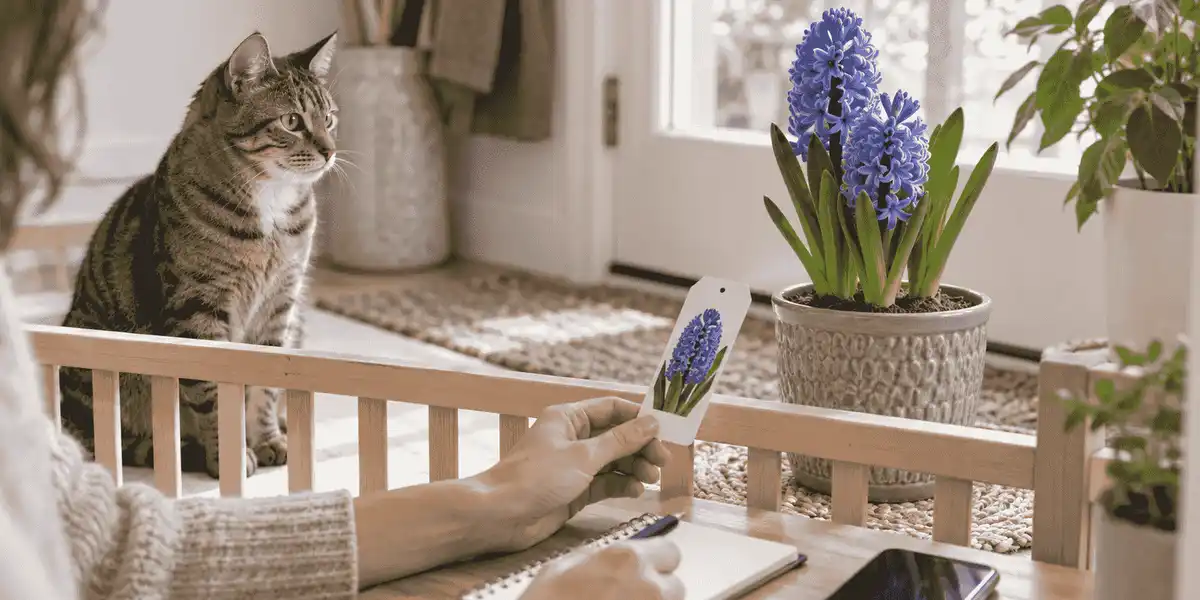
Read the plant tag, bulb packet, receipt, or botanical name before you borrow a classification. A flower colour, familiar shape, or shop category is not enough to establish which entry applies. If the name is uncertain, keep the plant inaccessible while you ask for help rather than choosing the most reassuring result. The plant-safety checklist gives this exact-name step a place in a new-cat home walk-through.
“Non-toxic to cats” also has a narrow meaning in a database list. It does not mean a cat should chew the plant, and it does not classify the soil, fertiliser, pesticide, mixed container, or anything used to care for it. Keep those items separate when you identify what a cat could have contacted.
Why the Bulb Changes the Exposure Note
Pet Poison Helpline describes tulip and hyacinth alkaloids as occurring throughout the plant structure, with the highest concentration in the bulb. That makes a loose bulb, a disturbed pot, or a piece missing from a planted bulb important details for the call. It does not make a leaf, stem, or flower automatically safe.
The same guidance says small amounts of leaves, stems, or flowers may result in mild nausea with vomiting. It describes bulb material as posing risk for persistent gastrointestinal distress, including vomiting, loss of appetite, diarrhea, and drooling, plus lethargy. “May” and “risk” matter here: these are reported boundaries, not a promise about your cat and not a home triage scale.
Do not turn the highest-concentration part into a bite count or a safe threshold. The amount, timing, plant identity, plant part, and the cat’s own details belong with a veterinarian or animal poison-control professional. The tulip exposure guide covers the same bulb-versus-flower distinction for another named spring plant.
Make a Four-Part Hyacinth Exposure Note
If a cat may have chewed the plant, move the remaining plant and loose pieces out of reach if you can do that safely. Then write down what is known without trying to improve the story in either direction:
- Plant identity: copy the label and botanical name exactly. Keep the pot tag, bulb packet, receipt, or a clear label photo available.
- Plant part: say whether the possible contact involved a bulb, leaf, stem, flower, or an uncertain mixture.
- Time and amount: record when it may have happened and what appears missing or chewed. Do not invent a precise bite count.
- Current condition: note vomiting, diarrhea, drooling, appetite change, lethargy, depression, tremors, or another change from normal.
The ASPCA entry lists intense vomiting, diarrhea occasionally with blood, depression, and tremors as possible clinical signs for its named Hyacinth entry. A sign cannot confirm the cause, and a cat that looks normal does not turn an uncertain exposure into a safe amount. Call your veterinarian or an animal poison-control service as soon as possible when contact may have occurred.
Keep Home Treatment Out of the Guesswork
Do not induce vomiting, give medication, or use a household remedy unless a veterinarian or animal-poison-control professional specifically directs it. Keep the plant label or a photo beside the phone, and tell the professional the cat’s species, age, approximate weight, relevant health details, plant identity, part involved, possible amount, timing, and current signs.
If the plant cannot be identified quickly, say that plainly. The exact name is useful call information, but it should not become a delay tactic when a cat is already unwell. A professional can decide what matters most from the exposure details and the cat’s current condition; this article cannot calculate that decision.
Set Up the Room Before the Next Curious Climb
For a new cat home, make plant identification part of the first room check. Keep Garden Hyacinth and any uncertain plant behind a closed door, stable barrier, or another arrangement your cat cannot reach. Store bulbs, cuttings, fertiliser, pesticides, potting materials, and plant-care products in closed storage with their labels intact.
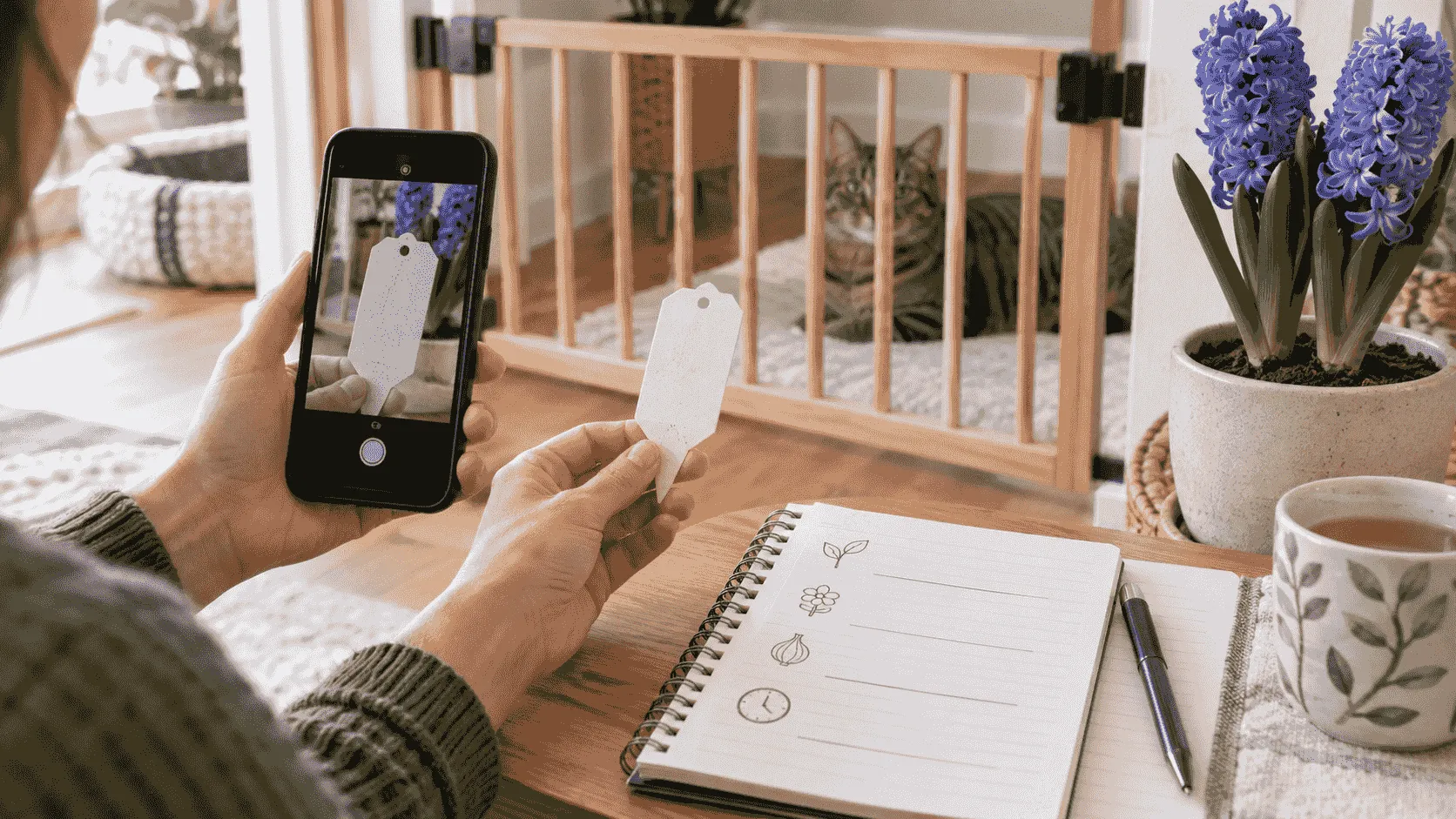
Save a photo of each plant tag before repotting. If a label says only “hyacinth,” keep the plant separated until you can match the common name to a botanical name or ask for professional guidance. Recheck the setup after furniture changes or when a cat learns a new route onto a shelf.
The practical answer is conditional: ASPCA lists its named Garden Hyacinth entry, Hyacinthus orientalis, as toxic to cats, while other plants sharing the word hyacinth appear separately in its cat list. Identify the plant, record the exposure, move it out of reach, and call before attempting any home treatment.
Sources
Petzette's claim cards for this article point to the following scientific, veterinary, or animal-welfare sources.
- Hyacinth Named-Entry Safety Boundary: Animal poison-control guidance and named-plant database entries
- AVMA Pet First Aid: Poison Response Boundary: Veterinary-association first-aid brochure